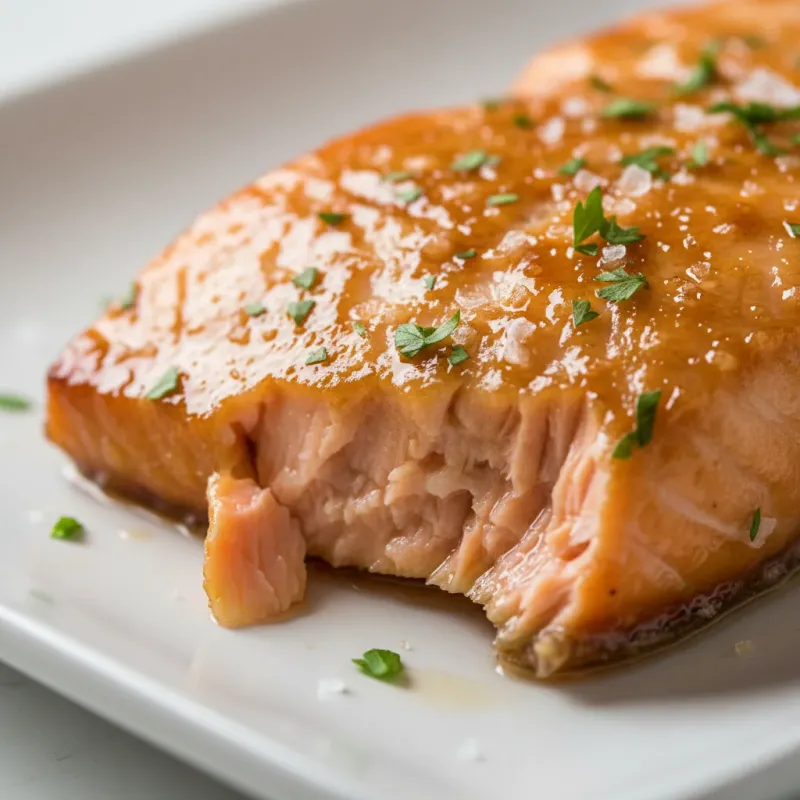
Honestly, there’s something soothing about the way honey caramelizes in the oven, turning the salmon into a glossy, fragrant centerpiece. I remember the first time I tried this, the kitchen filled with a warm, golden scent that made me pause and smile. It’s simple, it’s comforting, and it invites you to linger a little longer at the table.
The essence of the dish
A tender, flaky salmon fillet cradles a thin veil of honey‑soy glaze, offering a sweet‑savory harmony that feels both familiar and slightly indulgent.
A fun fact or historical angle
In medieval Europe, honey was often used to preserve fish; the natural sugars helped inhibit bacterial growth while adding flavor.
Flavor or sensory focus
You’ll notice the gentle stickiness of the glaze, the bright snap of lemon, and the warm perfume of garlic as the salmon cooks.
You Must Know
- Do not over‑cook; salmon is done at 145°F.
- A thin glaze prevents a soggy surface.
- Skin‑on fillets protect the flesh from drying.
When the timer dings, resist the urge to pull the pan out too early. Let the heat finish its work—this ensures the glaze sets just enough to give a subtle sheen without turning gummy. Also, keep the fillet skin side down for the first part of baking; it acts as a natural barrier, keeping the flesh moist and flavorful.
The story behind it
The practice of glazing fish with honey dates back to ancient Mediterranean coastal communities, where sweet and savory flavors were paired to preserve and enhance the natural richness of the catch. Over centuries, that tradition migrated north, finding a home in homestyle American cooking, where the honey glaze offers a mellow contrast to the buttery texture of baked salmon. This timeless technique brings together the sea’s bounty and the garden’s sweetness in one humble dish.
Why You'll Love It
- It’s quick and easy for busy evenings
- The honey glaze adds a caramelized depth without overwhelming the fish
- Minimal cleanup; just a sheet pan and a spoon
- Warm, comforting flavors that feel home‑cooked
Tips for success
- Don’t overcrowd the pan, give each fillet space to breathe.
- Let the glaze sit on the fish for a few minutes before baking, it deepens flavor.
- Taste the glaze before applying; adjust salt or acidity as needed.

Professional secrets
- Room temperature salmon cooks more evenly.
- A quick sear on the skin side adds texture before baking.
- Use a light hand with the glaze; too much can cause burning.
Common mistakes to avoid
- Overcooking the salmon, leading to a dry texture.
- Using too much glaze, which can burn on the edges.
- Skipping the pat‑dry step; excess moisture prevents crispness.
Substitutions
- Honey: Maple syrup. Maple syrup is thinner; use slightly less and watch for caramelization.
- Soy sauce: Tamari. Tamari is gluten‑free and has a richer taste; keep the same amount.
Variations
- Spicy Version: Add ½ tsp red pepper flakes to the glaze and a drizzle of sriracha after baking for a gentle kick.
- Mediterranean Style: Stir in chopped olives, sun‑dried tomatoes, and a sprinkle of feta just before serving.
Storage
Store leftovers in an airtight container in the refrigerator for up to two days.
Make ahead
You can whisk the honey glaze up to 12 hours ahead and store it in the refrigerator; bring to room temperature before brushing.
Leftovers
Reheat gently in a skillet over low heat, adding a splash of water to keep the fish moist and the glaze glossy.
Serving ideas
- Serve over steamed basmati rice with a sprinkle of fresh parsley.
- Pair with a side of roasted Brussels sprouts tossed in olive oil.
- Add a light cucumber salad dressed with lemon vinaigrette.
- Garnish with additional lemon wedges for a bright finish.
Allergy information
Contains fish, honey, soy (contains soy sauce).

Honey Baked Salmon – Sweet & Savory Delight
Sweet honey‑glazed salmon baked to perfection, ready in minutes, with soft, buttery flavor.
- Prep time
- 10 min
- Cook time
- 20 min
- Total time
- 30 min
- Difficulty
- Easy
- Cuisine
- American
- Course
- Main Course
Ingredients
Main Ingredients
Optional Garnish
Instructions
- 1
Preheat the oven to 400°F (200°C) and line a sheet pan with parchment paper.
- 2
Pat the salmon dry, season both sides with salt and pepper, and place skin‑side down on the pan.
- 3
In a small bowl, whisk together honey, soy sauce, lemon juice, minced garlic, and olive oil.
- 4
Brush the glaze over the salmon fillets, reserving a little for the last few minutes of baking.
- 5
Bake for 12‑15 minutes, until the fish flakes easily and the glaze is glossy; if you like a deeper caramel, broil for 2 minutes at the end.
- 6
Remove from oven, drizzle any remaining glaze, sprinkle with parsley, and serve with lemon wedges.
Nutrition per serving
- 420 kcal
- Calories
- 36 g
- Protein
- 22 g
- Carbs
- 18 g
- Fat
Tips & notes
- If you prefer a spicier note, add a pinch of red pepper flakes to the glaze. - Avoid over‑cooking; salmon becomes dry past 145°F internal temperature. - For a crispier skin, start the fillet skin side down on a hot skillet for 2 minutes before transferring to the oven.
Frequently asked questions
Can I use maple syrup instead of honey?
Yes, maple syrup works well and adds a richer, earthy sweetness. Adjust the amount slightly, as it’s thinner than honey.
Do I need to skin the salmon?
Leaving the skin on helps protect the flesh and adds a crispy texture if you flip the fillet briefly under the broiler.
What side dishes pair best?
Steamed asparagus, roasted baby potatoes, or a simple quinoa salad complement the sweet glaze.
How do I store leftovers?
Cool the salmon, place in an airtight container, and refrigerate for up to two days. Reheat gently in a skillet.
Can I freeze the baked salmon?
Yes, freeze in a sealed container; reheat in the oven at 300°F until warmed through.
Is this recipe gluten‑free?
Simply swap the soy sauce for tamari to keep it gluten‑free while preserving the umami flavor.